Resources
Increase your AI-in-education understanding and capacity — with primers, how-tos, essays, research and professional development.

Filter by Topic
- All Resource Topics
- Equity
- Future of Work
- Communication
- Security & Threat Detection
- Teacher Support
- Curriculum
- Professional Development
- Coaching
- AI in Education
- Policy
- ELL Support
- Interventions & Special Education
- Assessment
- Administration
- Data Analytics
- HR & Talent Management
- Cybersecurity & Data Privacy
- Tutoring & Personalized Learning
- AI in General
- Higher Education
Filter by Type
FutureEd
May 1, 2026
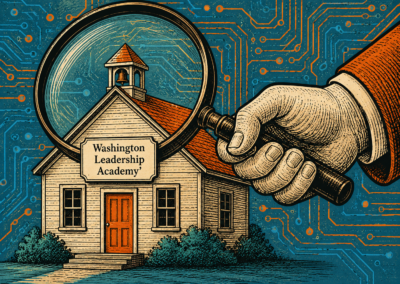
FutureEd profiles Washington Leadership Academy’s AI implementation, highlighting classroom uses, teacher supports, student AI literacy, equity goals, and policy lessons.

Consortium for School Networking
May 1, 2026
CoSN’s annual report surveys K-12 technology leaders on AI adoption, cybersecurity, staffing, procurement, digital equity, and district edtech priorities.
Federal Register
April 13, 2026
The Education Department’s final AI priorities and definitions for discretionary grants, emphasizing AI literacy, ethical use, evidence-building, privacy, and workforce preparation.The Education Department finalizes an AI priority and definitions for discretionary grants, emphasizing AI literacy, ethical use, evidence-building, privacy, and workforce preparation.


RAND Corporation
April 8, 2026
An overview of a RAND research report analyzing AI’s growing use among students, and their declining opinion of its benefit to learning.

BCG
April 3, 2026
BCG argues that AI is more likely to reshape work than simply eliminate it, predicting widespread task-level change, slower full job substitution, and a leadership imperative to pair automation with upskilling, redesign, and deliberate talent planning.
CoSN, Digital Citizenship Coalition, ISTE+ASCD, ATLIS
April 1, 2026
This guidance document helps districts replace punitive technology rules with clearer Responsible Use Agreements that address AI, digital citizenship, family engagement, privacy, and student well-being.

AI Hub for Education, SCALE Initiative, Stanford University
March 11, 2026
This Stanford review synthesizes more than 800 AI-in-K-12 papers and highlights 20 high-quality causal studies, showing promising short-term gains, educator efficiency benefits, and major gaps around long-term learning, equity, and student wellness.

Department of Education, University of Oxford
March 3, 2026
An Oxford report synthesizes participatory input into a shared AI-in-education research agenda, highlighting priority questions around human flourishing, pedagogy, cognition, equity, governance, assessment, literacy, and the future of work.
CoSN
March 1, 2026
A district-facing maturity rubric that helps school systems gauge generative AI readiness and progress across leadership, operations, data, technology, security, legal risk, and academic AI literacy, then identify next steps for safer, more coherent implementation.
ILO Group
March 1, 2026
A report proposing an adaptive governance approach to AI in K–12 that balances innovation, oversight, and system learning.

ExcelinEd
February 25, 2026
A model policy draft that can be used as a foundation for AI policy development outlining recommended guardrails that states and districts should implement to ensure responsible use of AI tools in schools while protecting privacy and supporting educators.

Edtech Insiders (Substack)
February 18, 2026
Edtech Insiders releases updated K-12 GenAI market maps, splitting the landscape into AI-native startups and incumbents. The post explains the methodology shift and highlights where incumbents are most actively deploying AI across K–12 use cases.
Educators Technology
February 17, 2026
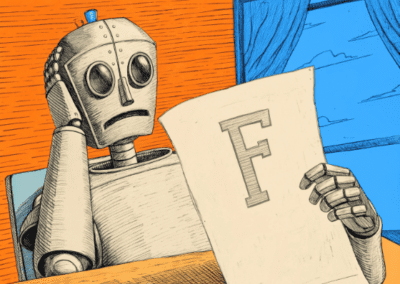
A practical guide highlighting several AI tools that help teachers provide faster and more detailed feedback on student work while maintaining professional oversight.
Educators Technology
February 16, 2026
A guide explaining how educators can design assessments that remain meaningful and authentic in a world where students can easily generate answers using AI tools.
CoSN
February 1, 2026
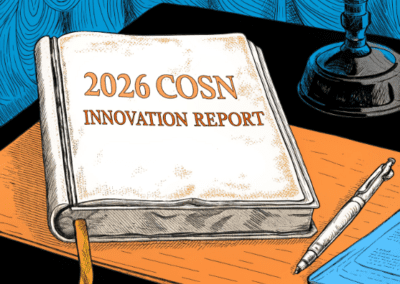
CoSN’s 2026 innovation report synthesizes input from its advisory board to identify key K–12 hurdles, accelerators, and tech enablers—highlighting generative AI, cybersecurity/safety, talent retention, learner agency, and leadership capacity.
CoSN
February 1, 2026
A report identifying AI, data, and leadership capacity as key forces shaping K-12 education transformation in 2026.

SETDA (State Educational Technology Directors Association)
January 29, 2026
A comprehensive framework for evaluating the quality and effectiveness of educational technology adoption.

Brookings Institution
January 14, 2026
A report from the Brookings Institution posits that we’re on the wrong path with AI in education, and suggests an alternate framework built around three pillars—Prosper, Prepare, Protect—to maximize the benefits of AI while reducing risks for student learning.
District Administration
January 6, 2026
Provides five concrete AI prompt examples administrators can use to support planning, communication, budget analysis, and social media tasks.

Educators Technology
December 25, 2025
Explains how Custom GPTs (or Projects) can make teachers’ use of AI more efficient and consistent, while tailoring instruction to specific contexts.