News
Stay up to date on changes in policy, shifts in the future of work and the latest updates in how schools are leveraging AI tools.

Filter by Topic
- All Resource Topics
- Equity
- Future of Work
- Communication
- Security & Threat Detection
- Teacher Support
- Curriculum
- Professional Development
- Coaching
- AI in Education
- Policy
- ELL Support
- Interventions & Special Education
- Assessment
- Administration
- Data Analytics
- HR & Talent Management
- Cybersecurity & Data Privacy
- Tutoring & Personalized Learning
- AI in General
- Higher Education
Filter by Type
K-12 Dive
June 9, 2026
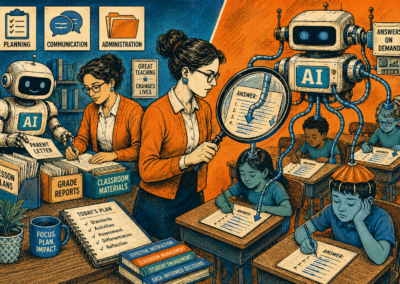
K-12 Dive summarizes NPR/Ipsos polling showing teacher concern that AI shortcuts harm critical thinking, assessment, and student-teacher trust.

EdSurge
June 2, 2026
EdSurge summarizes CoSN’s 2026 State of EdTech findings, emphasizing rapid AI guideline adoption, cybersecurity anxiety, staffing shortages, and weak edtech vetting.
Education Week
May 27, 2026
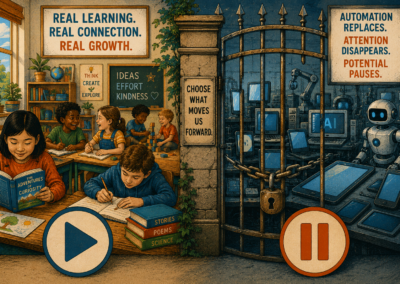
Education Week reports on AFT’s plan to limit young students’ screen and AI use, increase teacher training, and tax major tech firms.

ExcelinEd
May 26, 2026
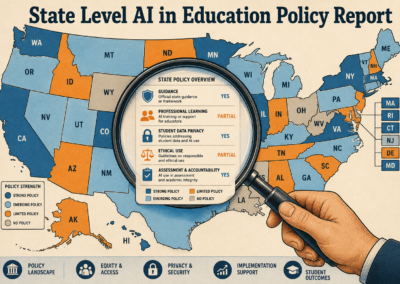
ExcelinEd reviews state K-12 AI policy activity and argues that states need stronger frameworks for privacy, tool safety, educator support, and vendor transparency.
One Useful Thing
May 26, 2026
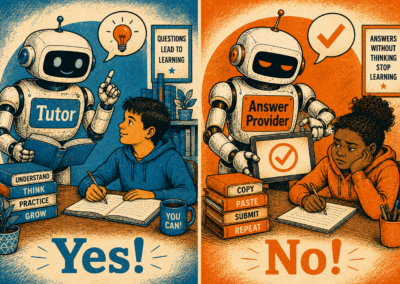
Ethan Mollick argues that AI should be used intentionally, preserving human thinking and learning while using tutoring-style support instead of answer-giving shortcuts.
Associated Press
May 14, 2026
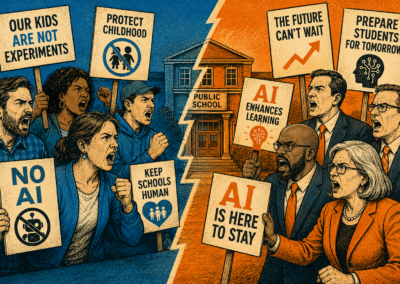
AP reports on parent resistance to classroom technology in Pennsylvania and the broader national debate over screens, software, privacy, and student responsibility.
The 74
May 8, 2026
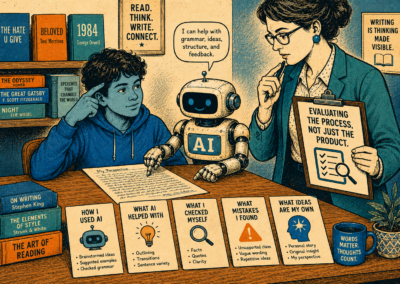
David Nurenberg describes teaching AI literacy in English class through AI audits, critical evaluation, human voice, bias analysis, and reflective use.
The 74
May 4, 2026
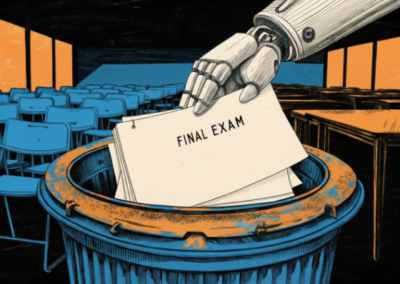
Jane Swift argues that federal flexibility and AI-enabled tools create an opportunity to replace outdated end-of-year tests with more continuous, instructionally useful assessment.
CoSN
April 30, 2026
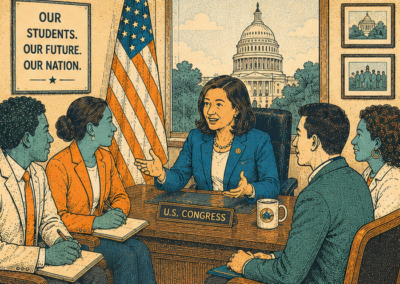
CoSN reports that education technology leaders met with congressional offices to advocate on AI, cybersecurity, broadband, privacy, screen time, and local decision-making.

The New York Times
April 30, 2026
Many high school and college educators are moving writing back into the classroom as take-home assignments have become difficult to police in the AI era. In-class, handwritten, reflective, and process-oriented writing can restore authenticity and make student thinking more visible.
The New York Times
April 29, 2026
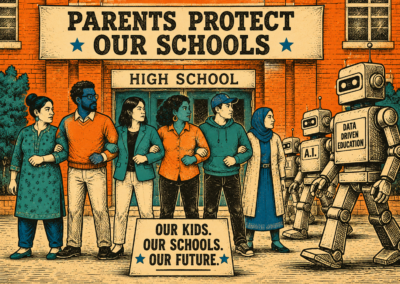
Natasha Singer reports on a growing parent-led backlash against heavy classroom technology use, including school-issued devices, educational apps, and AI tools.

District Administration
April 28, 2026
Micah Ward highlights the gap between student AI use and unclear school policy, warning that many schools are behind the reality of classroom adoption.

The 74
April 28, 2026
Greg Toppo explores how Code.org is repositioning computer science education as AI changes coding careers, student motivation, and the value of foundational technical literacy.
Education Week
April 24, 2026
Education Week covers LAUSD’s move to limit classroom screen time amid concerns about student well-being, generative AI, and past technology failures.
Education Week
April 20, 2026
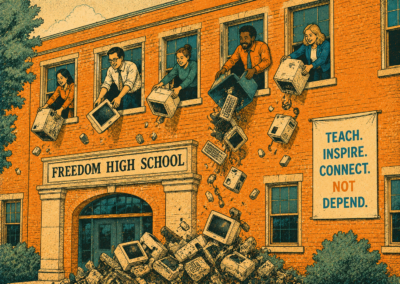
Education Week examines the backlash against classroom screen time and asks how districts can make technology use more intentional rather than abandoning it wholesale.
Rick Hess On Education
April 17, 2026
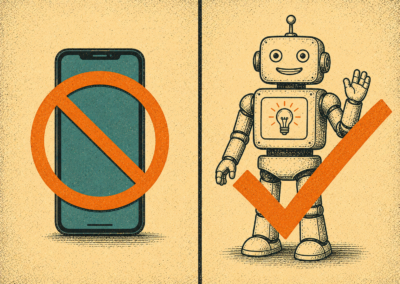
Rick Hess interviews Michael Horn about the apparent contradiction between embracing AI and limiting phones, emphasizing coherent school design over tool-first adoption.
The 74
April 14, 2026
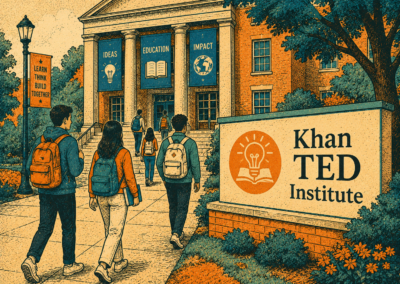
Greg Toppo explains the proposed Khan TED Institute, an online AI-focused college created by Khan Academy, TED, and ETS for an AI-shaped workforce.
K-12 Dive
April 14, 2026
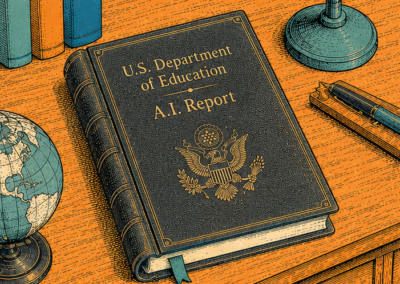
Anna Merod summarizes a final Education Department rule that gives grant priority to projects expanding AI understanding and ethical AI use in education.

CoSN
April 14, 2026
CoSN announces updated responsible technology guidance that incorporates generative AI, student well-being, digital citizenship, data privacy, and family-friendly Responsible Use Agreements.
Education Week
April 10, 2026
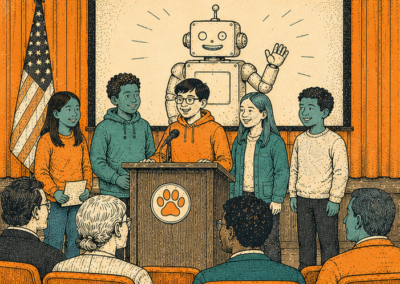
Sarah Schwartz reports on student voice on AI issues, covering middle school students who studied AI tools and then advised teachers about ethics, learning, assignments, and responsible classroom use.