News
Stay up to date on changes in policy, shifts in the future of work and the latest updates in how schools are leveraging AI tools.

Filter by Topic
- All Resource Topics
- Equity
- Future of Work
- Communication
- Security & Threat Detection
- Teacher Support
- Curriculum
- Professional Development
- Coaching
- AI in Education
- Policy
- ELL Support
- Interventions & Special Education
- Assessment
- Administration
- Data Analytics
- HR & Talent Management
- Cybersecurity & Data Privacy
- Tutoring & Personalized Learning
- AI in General
- Higher Education
Filter by Type

The Atlantic
April 10, 2026
Lila Shroff examines AI agents that can complete schoolwork automatically, raising questions about assignments, grading, academic integrity, and teacher-student relationships.


Chalkbeat
April 9, 2026
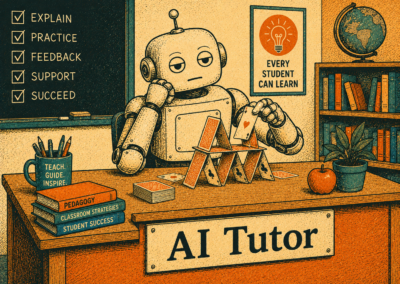
Sal Khan reflects on why Khanmigo has not produced the AI tutoring revolution he once predicted and argues that AI works only when paired with stronger human systems.

District Administration
April 8, 2026
Micah Ward identifies three state-level AI policy trends: AI literacy requirements, student data safeguards, and task forces before mandates.

The Atlantic
April 6, 2026
Using one Colorado math teacher’s classroom shift from Chromebooks to paper, this article argues that heavy screen use can reduce attention, obscure student thinking, and make teaching less relational, even when technology promises personalization and efficiency.
EdSurge
April 2, 2026
Discusses how districts are reevaluating overloaded edtech ecosystems to focus on impact and coherence.

K-12 Dive
April 2, 2026
Looks at how districts are trying to respond to fast-moving AI developments through policy, guidance, and more deliberate implementation.
April 2, 2026
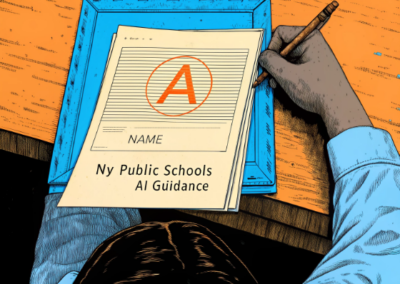
Nick Potkalitsky praises NYC Public Schools’ AI guidance while arguing that its traffic-light framework cannot fully govern complex classroom workflows.
What Teachers Have to Say
March 31, 2026
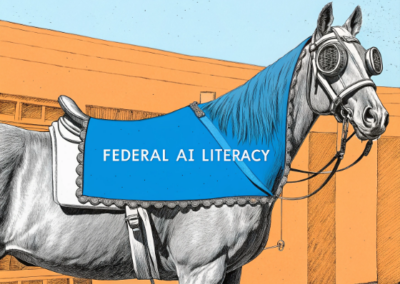
Jacob Carr argues that a new federal AI literacy push defines literacy too narrowly around workforce readiness, urging educators to question whether school-based AI literacy should also center bias, judgment, and broader civic aims.

EdSurge
March 27, 2026
Examines how teachers are still grappling with identifying meaningful and practical AI use cases in classrooms.

Getting Smart
March 26, 2026
Analyzes global national AI strategies in education, highlighting a shift from compliance-driven policies to more coherent, system-level approaches.

Associated Press
March 25, 2026
Explores how colleges are adopting oral exams to address AI-assisted cheating and better assess student understanding.
The Chronicle of Higher Education
March 23, 2026
Explores one university’s effort to redesign assessment around oral exams and other formats that are more resilient in an AI-rich environment.

Education Week
March 20, 2026
Highlights how educators are advancing from basic AI use to more sophisticated, agenic instructional applications.

K-12 Dive
March 20, 2026
Reports rising student use of AI for homework, along with growing concern that reliance on these tools may weaken learning and critical thinking.
One Useful Thing
March 12, 2026
Ethan Mollick argues that AI has entered a new agentic phase in which people increasingly manage systems that complete substantial work autonomously, accelerating organizational change and raising the urgency of adaptation across industries and institutions.

Education Week
March 12, 2026
Summarizes a commission’s call for major federal role to better prepare students for an AI-shaped economy and society.

Education Week
March 5, 2026
Explores how young people use AI for academic support and mental health, highlighting benefits and risks.

The New York Times
March 4, 2026
Reports that Chinese policymakers and the public are broadly optimistic about A.I., emphasizing practical opportunity more than existential risk, and explores cultural, economic, and policy factors shaping China’s comparatively upbeat stance.

The New York Times
March 2, 2026
In China, some parents are turning to AI-enabled tools to handle kids’ homework and tutoring needs, raising questions about learning, pressure, equity, and what schools should expect as home study becomes AI-mediated.
K‑12 Dive
February 27, 2026
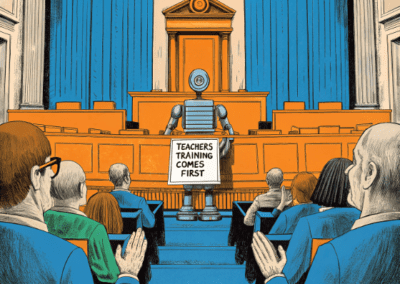
Lawmakers and education leaders emphasized the need for stronger teacher professional development in artificial intelligence during a congressional hearing on the technology’s growing role in classrooms.